Keeping it all straight

Silly putty meets Mr. Potato Head
Over a week ago, I had a colleague of mine say to me:
"Do you write all of the things you learn down? It seems like you have a wealth of knowledge and I was wondering what your tricks are for keeping it all straight"
My response to her was that I don't write things down. I just keep the bits in my head. I told her that I read many different topics that interest me, and I listen to podcasts every day, to and from work. All of these things are absolutely true. But after I said that, it got me thinking if there was more to it. To be honest, I still don't have a great answer to the question. I do know that I listen, form opinions, engage, and adapt in topics that interest me. My assumption is that this is the basics how I obtain knowledge and get smarter on topics.

When I listen, I will often start with someone that is guru or expert in a topic. But I don't just listen to the experts, because the experts provide an opinion influenced by their experiences. That is not to say that the experts are not extremely knowledgeable, I just mean that that I don't only listen to the experts. I listen to clients, customers, and other people that are interested in the same topic. I listen to implementer's, practitioner's and end user perspectives. Each person has their own perspective, their own experiences, their own points of pain and desires. They are worthy of being heard.

As I am listening (and no, these are not done in a "waterfall process"), I start forming my own opinions, based on what I am hearing and in a similar fashion to the experts, these opinions are influenced by my personal experiences. These opinions are formed based on what I know has worked in the past and what I believe might make a difference going forward.

As I am forming my opinions and listening, I am engaging people, sharing my thoughts, sharing what I have heard, and bouncing new ideas off of people. Seeing what sticks and expecting and hoping that people will be willing to provide honest feedback and new direction. I continue to listen and form new opinions. With the engagement, my hope is that I either find others that are as passionate as I am, or that I find people that are willing to listen and over time become just as engaged.

To be able to listen, form opinions, and engage others, I find that being able to adapt is crucial. So as I listen, form opinions and engage others, I am continuously adapting. Without adapting, my fear is that the conversation, the collaboration, and the willingness to share will stop. If I don't adapt, the people that I had hoped to engage and become passionate will stop being engaged. The people that I have been listening to will not share their experiences and the opinions that are so valuable to what is in the future will dry up or become irrelevant.

After thinking about this question for over a week, I am grateful my colleague asked me the question. It got me to think beyond my day job and provided me an opportunity to form an own opinion. My hope is that I can get others to engage on this topic. So I will ask the question, how do your learn? What is the basis for your learning? Deep down, what keeps you engaged?

If I were to re-answer the question my colleague asked me a week ago, I know my answer would be different. I would say, because I am engaged and passionate about a subject, I know that by listening, forming opinions, and engaging others will help me form a better picture in my head that is much easier to remember and pass along to others. But without being able to adapt, no one will be there to hear what you have to say. thoughts?

People are People


re tweet me
(Image credit: wordsdoneright.blogspot.com)
"No matter how busy you are, you must take time to make the other person feel important." - Mary Kay Ash

I recently received an email from a colleague at work referring me to an internal blog post. The thoughts in the blog post talked about flexibility, work life balance and Enteprise 2.0. To be honest, the blog post on its own was awesome. In addition to the blog post being so great, there were many many comments to the blog post. One caught my attention, and this single comment is inspiration for this blog post. The comment is provided here (with a couple of small edits):

I love my iPhone!
I don't know how I survived before I got my iPhone. Besides checking my e-mails, I use it daily: to check the weather, listen to music,read CNN & USAToday headlines, update my Twitter feed and play Words With Friends (it's so addictive!). I use the Open Table and Fandango apps to make dinner reservations and buy movie tickets.
I couldn't live without texting. My son recently got his driver's license, so he keeps me posted with his whereabouts by texting me. I text friends to meet them for lunch. I'm so comfortable texting that sometimes I catch myself typing "u" for "you" or "c" for "see" in emails at work. And, yes, I often wonder why email at work doesn't have auto complete / auto correct. How awesome would that be?
The best example of how my iPhone keeps me connected has to be what happened to me at a recent event at work.[We had an external speaker come in to talk at work]. I follow the speakers Twitter feed, so I tweeted her from my phone the morning of the event to tell her that I was excited to come hear her speak. And she actually tweeted me back! So after her talk, I approached her to sign a copy of her book. As we chatted, I mentioned that I had tweeted her earlier that morning. She actually stopped what she was doing, looked up at me and said, "I'm so happy that you came over to say hi. I didn't recognize you. You're so much blonder than your Twitter picture!" How cool is that? Without my iPhone, I never would have made a personal connection with such a remarkable woman.
The part that struck me the most is the last last paragraph, the commenter describes making a connection through a social network activity stream (Twitter). It got me to thinking about how this type of interaction online enhances relationships of people. She took the opportunity to reach out to someone before the speaker came to work to talk and then took the opportunity to meet and talk with the speaker after to event. And just by making a connection via twitter, the commenter was able to 1. Make a connection with someone that she would never have made before and 2. the connection was even better/enhanced, if she hadn’t met the initial connection via twitter. Can you imagine the power this could have within the Enterprise?

Being able to see people profile pics is just the tip of the iceberg. Being able to connect with someone before a meeting in an ad hoc manner, even someone you have never talked to, and then meeting them in person. Imagine how that could enhance relationships - the power of person to person contact is important and is quickly enhanced when the connection is made in an almost anonymous fashion initially.

To illustrate the point, I have had this happen to me. I follow people that I view as "stars" in the E2.0 world. This past June, I got to meet the stars that I had been following via twitter Google+ and other social network venues when I went to the Enterprise 2.0 conference. While I viewed the people I met as start in the E2.0 world, I quickly found out after meeting them that they were just regular people that like sharing their knowledge. And in addition, looking back at the interactions and actions I had with them, they valued my knowledge just as much as I valued theirs. I found that many of them looked to me for inspiration, just as I had looked to them for inspiration. It was an awesome experience that enhanced the relationship I had already started to form online.

Looking back at both my experience and trying to relate to the commenters experience, I can honestly say that learned two things :
  1. People are people, and while you might put someone on a pedestal, they often have not done that with themselves. They look at what they do as just something they like to do and are happy to help out.
  2. Having a relationship with someone online enhances the relationship once you meet them in person. It makes the relationship build quicker in person and in the end, the friendship is even deeper than it would have been without the initial online relationship.
For those people that I am talking about (and you know who you are), let me just say that I am awed over and over by you all. In fact, I gush about every one of you every time I start talking with colleagues (at work) about E2.0. You all mean that much to me. Thank you.


1lb or 5lbs? Sifting is done the same way

Sifting the 5lb bag
Greg Lowe has a great post on social hitting the mainstream, called Social & the 5lb bag  Definitely go check it out. He makes quite a few good points about what he is seeing today (I am seeing the same stuff) and what to expect in the future from vendors.

While Greg takes a glimpse into the future, I want to look at the issue from what people have done in the past.  The questions that I like to ask is about how people have done it in the past and will people change their behavior and way of processing the task at hand because of a new technology.

In the case of "Social" they questions I have include:  How did people find information (knowledge) in the past?   How did they determine that the information/knowledge was good or bad or old?  Will people's behavior and techniques change because I have implemented a new technology?  I am not talking about what technology did they use, but what are the ways people determined that a piece of information / knowledge answers the question they have. Do these their techniques change now that we have "Social" as a technical solution? My answer?  no

I don’t think the path of determining valuable information / knowledge has changed.  What has changed over time (and will continue to change) are the methods used to find that information (search, activity streams, communities, FAQs, etc.  today .... what will it be in the future?.)  But the really big change is the amount of information / knowledge has grown, the ease of access to this information/knowledge is better, and the speed of change related to the knowledge has increased (debatable based on the subject matter).

Is that the definition of information overload?

Today people have to sift through more sources of information, sift through more information, and sift through that information with an eye on the age of that information.  And they have to do that using the mental tools they might have learned 5, 10, 20 years ago.  People adapt with each change, but many of the techniques remain the same.

I want to close quoting Greg's last paragraph
I’ve heard a lot of discussion lately around “System of Record” vs. “System of Engagement”. Can your social platform ever become your system of record? I’m not sure, but if so, the challenges to get there are going to be great. What is clear is systems of engagement will be generating knowledge, but what’s not clear is how that knowledge gets promoted to the system of record.
Greg rightfully states that one method to help the consumer in identifying valuable information is to tag the content in a system of record.  Interesting idea that could be very difficult to obtain.

I missed some reqs - My personal social media apps requirements part 2

I guess I was too quick to post my last post. Based on twitter comments and my own continued thinking of ideas I have come up with about 9 more abilities I would like to see in a social media aggregrator / twitter application. Here are the additions - enjoy:
  • recognize that a tweet was written in another language and automatically translate it in line -e.g. translate a tweet from German --> English 
  • allow to view items in a threaded view - see all tweets that are related to each other 
  • if in threaded view, allow the entire thread to be marked as read 
  • (not sure this was clear) any marked items can be removed from the view in the app manually 
  • ability to specific how many tweets / messages are stored in cache in the app 
  • ability to put all tweets in cache back into the view (read or unread) 
  • ability to mark all items as read 
  • ability to filter the list based on items that have a link or does not have a link 
  • ability to filter based on a word/name/hashtag 
  • provide the ability to define multiple columns that you can read - all friends, home, favorites, mentions, searches, Facebook, linked in, etc.

    My personal social media apps requirements

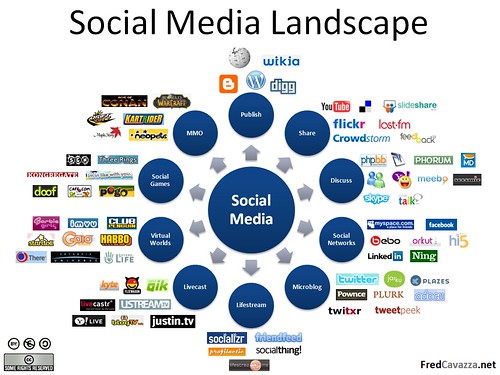
    social media landscape
    Fred Cavazza from Flickr
    I use twitter.  I use twitter enough to know that some aspects of the apps that support twitter are annoying.  So instead of just festering in my disgruntlement, I have decided to write a blog post with my wish list of features for my ideal twitter application.  For the record, I have used tweetdeck, seesmic, hootsuite, the app formally known as touiter and several others.  All of them have great features but none of them do everything I want them to do.

    Hear is my list :

    • the ability to quickly and easily indicate if a tweet has been read or not - TweetDeck has this feature and it is easy to mark things as having been read already 
    • the ability to sync across devices (computer --> phone --> tablet) information such as account information, which columns I have setup and if I have read or not read a tweet 
    • ability to save items and have them sync'd to InstaPaper
    • the ability to integrate other twitter like feeds that follow the twitter api, e.g. Socialcast, yammer, etc.
    • ability to customize the theme colors
    • ability to create custom plugins to extend the app (ala Seesmic) 
    • have direct messages(DM) not cached in the client - ever notice that when a DM is deleted it sometimes sticks around in some apps - #fail
    • ability to caches tweets or not to cache tweets - make it configurable - indicate how many tweets to cache (ala TweetDeck)
    • after reading an item, the items should not stay in the cache
    • ability to have some smart filtering of tweets ala my6sense - if integration with my6sense works, that is a bonus (don't fix what works)
    • integration with more than just twitter - linked, Facebook, etc.
    • have all tweets, recent posts (Facebook), activity stream, linked in, etc. land in one column in one area - provide an easy way to see that the post came from various sources, twitter, Facebook, etc. (ala TweetDeck in chrome/android)
    • color coding for individual users - automatic differentiation across users - ability to apply similar colors to a group of people based user definition (e.g. all the people I know from work are in one color range)
    • as close to real time updates as possible (think TweetDeck)
    • integration with external services like url shortening, image and video services - have the aiblity to look at image, video in line to app
    • tweetchat like functionality - follow a hashtag and then be able to respond and have the hashtag automatically added


    Casting a Wide Net

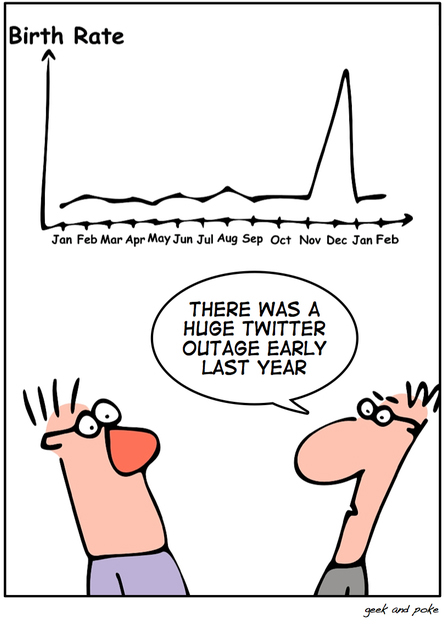
    twitter outage casting a wide net
    My team researches, coordinates and implements many of the Enterprise 2.0 activities where I work.  The other day I was having a discussion with my team doing research on the Internet.  As part of the conversation, I asked them to guess the method that I use most often to find relevant and timely information while casting a wide net that allows me to capture as much information as possible.  The team answered back with  The guesses including RSS feeds and search engines.  While I do use both of these methods, they have flaws associated with them when you need to meet criteria such as timely. relevant and wide net:
    1. I find searching via a search engine, provides a results that are relevant, but will almost always provide results that are rarely timely.  Many of the articles are articles that occurred  months and years ago.  
    2. I do use RSS feeds and will continue to use RSS feeds.  RSS feeds provide timely information and relevant information.  The problem with RSS feeds though are that there is no way that you could watch and pay attention to all RSS feeds that are in the Internet.  There is no way for you to find an article that was written by one person in an obscure blog.  RSS feeds provide timely and relevant content, but misses on casting a wide net. 
    While both Google searching and RSS Feeds provides a lot of information and I do use both methods, the one method I use find information that is timely and relevant information and casts a wide net is via twitter.  For me, the use of twitter is to keep up to date on Enterprise 2.0 topics, including collaboration, mobility and multimedia.  Basically, I use twitter extensively to keep a pulse on what is happening in E2.0.

    The question is, how does twitter allow for me to do these things?  I can't say that I have been a user of twitter since the beginning. In fact, I have only used twitter for about 1 year.  At the beginning I didn't know anything about twitter and why someone would want to use twitter.  But over the year, I have learned what makes twitter twitter and why it is such a great tool to find the latest information.

    There are 2 major ways to stay on top of the latest information while using Twitter.  The first is to follow the hashtag that people use related to your subject.  For example, E2.0 uses the hashtag #e20.  The second method is to follow a group of people that are mostly tweeting about the subject of interest.  For example, if you know there is a small group of people that are in a specific field, follow those people.  Inevitably, you will start to see tweets specifically related to that field.

    By following a group of people in your field of interest, you get to hear about what these trusted people think and do related to your field of interest. You also get to hear what they think is important as it relates to the field of interest.  By following a hashtag, you get to hear from many people that you might not be following.  There will be a lot more information in the hashtag, which can become overwhelming.  But by following the hashtag, you will find some new people that are worth following.

    I plan on posting more about how I use twitter and its usefulness.  Before I end this blog post though, there is one thing that is very important to remember.  If you see something that you think is useful, re-tweet it while including a reference to the original person that sent the tweet..

    etwo: The Social Business Formula

    equation formula
    I recently did a search on the word social business using google and bing.  What did I find?  The first hit on both search engines was to a wiki page that defined social business as (just the first paragraph):
    A social business is a non-loss, non-dividend company designed to address a social objective. The profits are used to expand the company’s reach and improve the product/service. This model has grown from the work of Muhammad Yunus and others.
    hmm, not what I expected to find.   In fact, based on everything I have been reading recently in twitter and on blogs, it is completely different than what I would have expected.  As I read the many blog posts and tweets, the references to social business are typically associated with Social CRM, or SCRM, Social Media, and Enterprise 2.0.  In contrast Luis Suarez does a nice job of summarizing his view of what Social business mean in his recent blog post Enterprise 2.0 vs. Social Business – The Final 2.0 Transformation.  Social business is about ...
    ... not placing a specific focus on either technology, or processes, nor people, but, instead, we keep thriving to strike that balance between (social) tools, (social) business processes AND people.
    Susan Scrupski, leader of the 2.0 Adoption council, provides more insight in one of her recent blog posts:
    I caution all our members (2.0 Adoption members) to keep their eye on the bigger picture.  The Council is expanding to embrace all facets of social business.  Going forward, it will not be possible to separate where social media initiatives begin and e20 ends.  And, every customer will tell you they rarely use any jargon when they’re presenting business cases to their executives.  The language they use is rooted in the benefits of social collaboration, not the features.  This is typically different for every company too, and becoming more and more strategic.
    I agree with both of these statement and in fact for a long time been done my job as an E2.0 enabler.  In addition to me following these ideals, I coach and teach my team that it is not about the technology, it is about the people that are using the technology, it is about how they do their job and how the technology can improve both of those (the people and the process).  In my mind, E2.0 is about improving efficiencies and was never about the technology.

    So with that said, a recent tweet by by Greg Lowe caught my eye.  In short (can't find the original tweet) the tweet said "socbiz = E2.0 + SCRM + ...".   This got me thinking about what he was trying to get across.  Since I do not see E2.0 as a technology implementation, this definition made more sense to me.  Why?  Well, what I see is that Social Business is really about bringing all of the various types of social ideas, Social CRM, Enterprise 2.0, social media, social media marketing, social supply chain, social analytics together.  Social Business is the idea that the business can be more efficient, be more collaborative, improve communications, and find that expert, while enabling the businesses to be more connected, internally/externally, person to person / business to business, etc. 

    My take on Social Business is that Social Business is bigger than any definition I have seen so far.  It includes everyone's definition I have read and combines them all together.  But to be really doing Social Business, you need to be doing at least 2 of the parts (doing them well) and integrating the ideals of those ideas together.  For example, if you do not integrate your E2.0 and social CRM together (in an appropriate way), then you are not doing social business.  You have not met the ideals of what social business is really all about.

    And that is my 2 cents on what Social Business is really all about and where Social Business needs to get to in the future if it is not already there.

    Power to the community

    MMOs and communities
    Stick with this post, there is a point to it, it just takes some time to get to it.

    Over the past 7 - 10 years I have played Massively Multiplayer Online(MMO) games.  I have played Dark age of Camelot(DAoC), World of Warcraft, Warhammer, Lord of the Ring Online and host of other games for various periods of time.  The draw to play each of these games is to hang out with friends, make new friends, and relax.  The best and easiest way to obtain friends is to join a Guild, which provides you a set of people that are there to back you up and to help you out when help is needed. As you get to know these strangers over time, you get to know them as friends, with the chance opportunity to meet some of them in person, after only talking to them online via chat or Voice of IP.

    Over the past year or so, my job has directed me to start working on bringing new technologies to help with collaboration, efficiency and communication.  The program my team works on is called Enterprise 2.0, an industry term which means bringing Social Media/Networking capabilities within the organization (internally focused).   As part of this program, I have had the pleasure of attending conferences and meeting people who are doing the very same thing in their companies.   One very important group of people that I have gotten to know is a set of Enterprise 2.0 advocates that are part of a community called the 2.0 Adoption Council.

    As part of the 2.0 adoption council, I just saw a reaction with the same amount of concern and angst that I had seen several times in my days playing DAoC and have seen periodically over my time playing in other MMOs and in various guilds.  The interesting part is that while I have seen this type of reaction in other situations, I had not seen this type of reaction with the same amount of concern and angst.

    The situation is that happened in the 2.0 Adoption Council was the announcement from one of its better known people that they were leaving the 2.0 Adoption Council because the person had decided that is was best to not be an active participant anymore.   The reaction from the Council was exactly the same reaction I have seen in online gaming.  Requests to ensure that squabbles external to the council do not distract.  People pointing out that the policies we use might be the reason person XYZ has left.  etc.

    In both situations, when this occurs, the outcry is heard and then it is on the community to make a decision.  Do they rebound and make things better than they were before, or do the do nothing and fold.   Believe it or not, in most cases I have found that the community survives and becomes strong for it.  They work hard to correct the issues that have become real and work to make life better for the community.   This is what I am seeing in the 2.0 Adoption Council and I am proud that I am member.

    Now I just have to get my act together to get myself more active to help make sure I do what I can to ensure the community does not fold.

    Played MMOs and still do - current game is Lord of the Ring Online (LotRO). Having been part of the community for a while, I see many similarities between the two.    I find that the community feel is very similar.   There is the obvious leader  (GM in MMOs, Community Leader).  This job is a full time job that requires lots of attention.  the community needs alot of feed and care

    IT is Evil

    During the past E2.0 conference (San Francisco), I heard many statements to the effect that "IT is evil". As I sat with my colleagues, my bosses boss included, we had many good laughs about this comment. You see, I am an IT person. And you would think that I would think that IT is not evil. But you know what, IT can and is often evil. I am not sure evil is the right term though. I favor the term, ignorant more than Evil. And to be honest, I know my bosses boss would agree with this statement. But you should also know that all of the IT people that I know try their hardest to deliver their products. But often they fall short or do it too slowly. They often build things that are complicated and don't make sense to the end user. But why is this? And what can be done to help fix the problem?

    For me (and this is all my opinion, just another IT person), when I see projects implemented, I see IT not listening to the people that provide the "directions". They believe they know better. They talk "over" and "above" others. They often miss the simple points and try to understand the harder points with little success. But before I go to far and say it is all IT's fault, I have to come to my fellow IT folk's defense, and say that it is not all their fault. The road is a 2 way road, and while their are issues that come from IT, their are issues from the other side. The other side, believes they know better, they don't listen to critism and suggestions. they often miss the simple points from IT and don't understand the harder points.

    So is the problem really that IT is evil or ignorant? No but It is (note the lack of the captial T). I wish it were as simple as saying IT is evil, but it is not. It is evil and ignorant. And It represents the people in the room that need to work together to make it happen. The problem is the level and degree of listening to each other and the amount of communications that are clear. The thought of collaborating with others can cause some people to run from the room. My suggestion, lock the door, because collaboration is exactly what the doctor is ordering in this case. And this type of collaboration is not a technology collaboration. this is a thought and mind collaboration. Get together and talk through ideas, brainstorm and listen to each other. Make sure you have been clear in your message and ensure you are listening and hearing to what is around you. As I say to my development team, stick your head up out of your cube and look around. See what is happening, listen to what is around you and try to understand it. And the biggest suggestion I have is, be patient.

    Viral Adoption

    “Statistics show that 97 percent of new blogs are abandoned after the first entry."

    Viral Adoption Over the past year, I assumed a new position as the Enterprise 2.0 technology program manager at my company. Initially my team was made up of 2 people and has steadily grown to a team of 13 developers and technology engineers. In addition, while my team has been growing, I have been working with several other IT groups and business users to help advocate the use of the Enterprise 2.0 agenda. The model I have taken my Enterprise 2.0 agenda is a distributed model, allowing my central team to advocate, market and advertise the abilities and the use of Enterprise 2.0 capabilities while letting each individual group to do their own advertising, marketing and advocating. We like to call this federal and state advertising.

    Since October of last year, I have had the pleasure to work with one team at the state level that has put my federal level advertising to shame. Of course they have had the pleasure of being able to focus their advertising on a smaller group of employees and they have been able to advertise on only one specific technology, but it still makes me envy their ability to be innovative in their advertising. As I have worked with them over the past couple of months, I have not just envied their advertising abilities, but in as many situations as possible I have learned from them and reused their tactics for my own purposes. Needless to say, this other team has been been extremely successful with their advertising and has garnered them great adoption from their targeted audience.

    This team's target audience for their collaboration sites was a set of sites for the IT division (over 3500 people).  This team decided that their first step would be to to roll out a subset of their final vision, communities of practice.  Their hope with rolling the communities of practice out to the IT Subdivision was to break down some of the silos that occur between the IT Subdivisions.  Their goal was to get the various development teams collaborating on how to improve the IT Process for building applications.  As proof of their ability to obtain adoption, they have stats that show the growth of their communities of practice from 13 communities to a total of 139 in a 6 month period of time.  On the home page they have 1800 unique visitors each month and they had found that the IT wide wiki has grown in just 6 months to over 3500 pages.

    What methods did they use to garner so much adoption in a short period of time?  They used several methods including chalk writing in front of buildings to advertise the release of their new site. They also did the traditional advertising such as using our corporate intranet to advertise their sites. Beyond these in your face advertising, they also enlisted a group of people to help with viral adoption.   They identified ambassadors and advocates.   The ambassadors and advocates are not management, but instead are the employees at the ground level.  The ambassadors and advocates are people that believe in the communities and talk up their individual community and promote the ideals of the communities.  These people are people that are so excited that they push their peers to use the sites.  Often these groups will peter out after the initial push, but they have been able to get the ambassadors and advocates to not let up.

    One method has been to identify a group of admins and created a community just for them. The admins meet weekly and while the owners of the IT site, the admins have taken over the weekly meeting and have started teaching each other how to improve their own sites. While they went after the grass roots groups, they also did a push at the management level.  They presented over and over to many management groups, keeping the awareness of the communities.

    The risk is that as time goes on that people will lose their excitement for the new communities - so what are they doing to keep the pressure up, to ensure that the communities are active and healthy?  Check back for my next post to read about what they are doing.